
Industrial Fuses
23 June 2026 carols
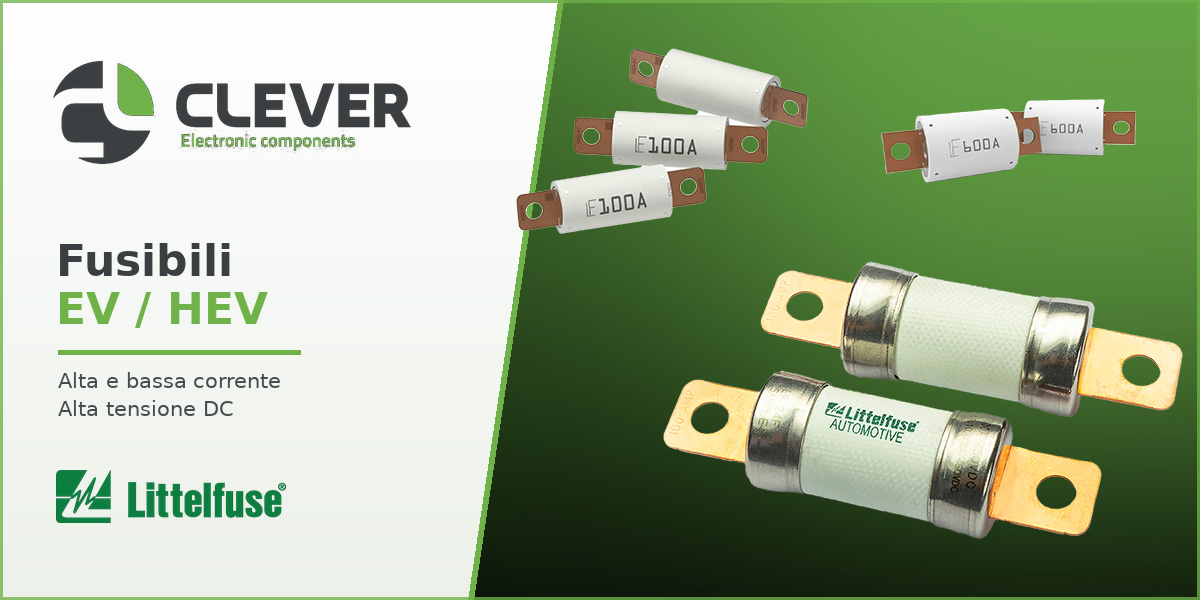
The protection of electrical circuits represents a fundamental requirement in any industrial application. A fault caused by an overcurrent or a short circuit can result in equipment damage, production interruptions and high maintenance costs.
Among the most widely used protection devices, the fuse continues to represent a simple, reliable and effective solution to limit the damage caused by abnormal operating conditions.
However, the selection of the right fuse requires a careful assessment of the circuit characteristics and the operating conditions of the application.
What is the function of a fuse
The main task of a fuse is to interrupt the circuit when the current exceeds a given value for a time sufficient to generate a potentially dangerous condition.
When an overcurrent occurs, the internal fuse element melts, interrupting the current flow and protecting the rest of the system.
This mechanism makes it possible to limit damage to particularly sensitive electrical and electronic components and reduce the risk of fires or extensive failures.
Overload and short circuit: two different conditions
One of the most common mistakes is to consider overload and short circuit as equivalent events.
They are in fact very different conditions.
Overload
It occurs when the circuit draws a current higher than the rated value for an extended period.
The causes may be:
- excessive loads;
- equipment malfunctions;
- sizing errors.
Short circuit
It occurs instead when two points at different potential come into direct contact, generating extremely high currents in very short times.
The ability of the fuse to operate correctly in both situations represents one of the main selection criteria.
The parameters to consider during selection
Fuse selection cannot be based exclusively on the rated current.
Several technical parameters must be evaluated.
Rated current
It represents the maximum value the fuse can carry under normal conditions without operating.
Rated voltage
The fuse must be designed to operate at the voltage required by the application.
Using a fuse with insufficient rated voltage can compromise system safety.
Breaking capacity
It indicates the maximum short-circuit current that the fuse is able to interrupt safely.
This parameter is particularly important in industrial applications and high-power systems.
Time-current curve
It defines the device’s tripping speed as a function of the overcurrent magnitude.
The choice between fast-acting or time-delay fuses depends on the load characteristics and the presence of inrush currents.
Fuses for industrial and electronic applications
Protection requirements can vary significantly depending on the application.
In electronic systems it is often necessary to protect particularly sensitive components, prioritising very fast tripping times.
In industrial applications, instead, the presence of motors, drives and inductive loads often requires devices capable of tolerating high starting currents without nuisance tripping.
A correct analysis of the application makes it possible to identify the most suitable solution and to ensure the operational continuity of the installation.
Protection in high-voltage systems
The growing spread of electric vehicles, energy storage systems and charging infrastructures has led to an increasing demand for fuses engineered for high-voltage applications.
In these contexts, in addition to protection against overcurrents and short circuits, it is necessary to consider aspects such as:
- high breaking capacity;
- DC current management;
- operational safety;
- long-term reliability.
HV applications require devices specifically engineered to operate under particularly severe conditions.
Solutions for circuit protection
Fuse selection is a fundamental part of the electrical system protection strategy.
To achieve reliable performance it is necessary to properly evaluate the coordination with the other devices in the installation, considering actual operating conditions and possible fault scenarios.
Among the solutions currently available on the market, specialised manufacturers such as Littelfuse develop a wide range of fuses for industrial, automotive, energy and high-voltage applications, engineered to ensure high reliability, safety and breaking capacity.
The evolution of modern electrical architectures in fact requires increasingly high-performance protection devices, capable of meeting the operational continuity and safety requirements of new-generation industrial systems.
Conclusions
Fuses represent one of the fundamental elements for the protection of electrical and electronic systems.
A correct selection makes it possible to protect equipment, reduce the risks associated with faults and increase the overall reliability of the installation.
Clever supports designers, OEMs, machine builders and system integrators in selecting the most suitable protection solutions for specific application requirements, providing specialised technical expertise and access to the technologies of leading international manufacturers.